
Do You Need a Bookkeeper for Your Business?

If you own a business, there is a good chance you started by handling many tasks yourself.
Sales, scheduling, customer service, marketing, invoicing, receipts, expenses, and tax documents often begin as tasks you can manage on your own. At first, your bookkeeping system may feel good enough. Maybe you have a spreadsheet, accounting software, a folder of receipts, or a process that mostly works.
But as your business grows, the question changes.
It is no longer just, “Can I do this myself?” The better question is, “Is doing this myself costing me time, clarity, or money?” For many business owners, the answer is yes sooner than they think.
Bookkeeping is not just data entry. It is the foundation for understanding what is happening inside your business. Clean records help you see where your money is going, prepare for taxes, avoid preventable mistakes, and make better decisions with more confidence.
Messy records do the opposite.
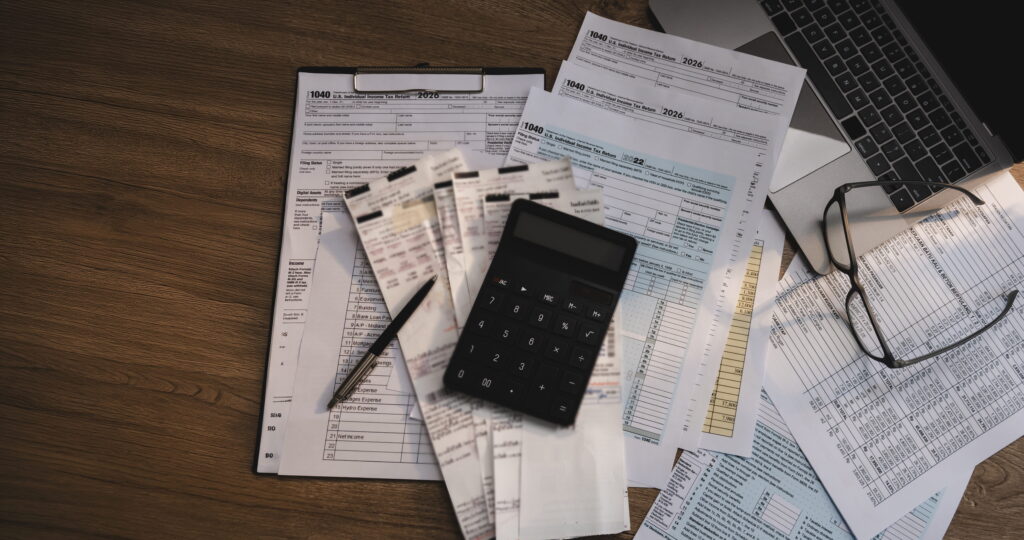
They’ll leave you confused and make tax season more stressful than it needs to be. They can lead to missed deductions, inaccurate reports, delayed filings, and expensive cleanup work later.
And for many small business owners, the bookkeeping burden is very real. One recent survey found that 43% of small business owners say they also act as their business’s bookkeeper. The same report found that owners are working more than 200 extra hours a year while trying to manage multiple roles. [1]
Most business owners have bigger priorities when it comes to dealing with clients, a legion of employees, and taxes, and often get pushed to the back of the mind. Often, we don’t think about taxes until they become an urgent matter.
You may need support if you are not sure your books match your bank accounts, if tax time always feels like a scramble, or if you are making money but still do not have a clear picture of where it is going. You may also be ready for help if you avoid looking at your reports because you do not fully trust what they say.
That lack of clarity can be costly.
A QuickBooks report found that small business owners with low financial literacy lose an average of $118,121 in profit. Nearly half said they had lost at least $10,000 because of low financial literacy. [2] That does not mean every business owner needs to become a financial expert. It does mean that clean, accurate records matter.
When records are incomplete or inaccurate, preparing taxes takes more time. It also becomes harder to answer basic business questions. Are you actually profitable? Can you afford to make a hire? Are your expenses creeping up? Are you setting aside enough for taxes?
If your books are not clean, those answers are harder to trust.
Sometimes cleanup is the first step. Small errors can build over time. Transactions may be categorized incorrectly. Business and personal expenses may get mixed together. Old balances may not match. Payments may be inaccurate or recorded twice. Even if you use bookkeeping software, these issues can make your reports unreliable.
The pressure on small businesses is not just theoretical. Federal Reserve Small Business Credit Survey data showed that, for the first time since the 2021 survey, firms were more likely to report revenue decreases than increases. [3] In a tighter environment, business owners need clear records so they can make decisions based on real numbers, not guesses.
We understand just how crazy running a business can be
The goal is to bring clarity so you save not only precious time but also money.
A good bookkeeping process helps prevent mistakes before they become bigger issues. It gives you organized records, cleaner reports, and a better understanding of your business. It also gives your tax preparer the information they need without the last-minute scramble.
The IRS also makes clear that business records matter because purchases, sales, payroll, and other transactions generate documents needed to record your books and support what appears on your tax return. [4]
Take the chance to get ahead before your tax season arrives.
In fact, getting support sooner is often the easier and less expensive path. Clean books can save time, reduce stress, and help you walk into tax season with more confidence. So let’s find out where your books stand as they are; that’s the first step to financial clarity.
GSD Tax helps business owners prevent bookkeeping mistakes, clean up records, and get the clarity they need to move forward.
References
[1] A May 2026 report summarized survey findings that 43% of small business owners act as bookkeepers and that owners work more than 200 extra hours annually. (New York Post)
[2] QuickBooks reported that low financial literacy costs small business owners an average of $118,121 in lost profit, with nearly half reporting at least $10,000 lost. (QuickBooks)
[3] The Federal Reserve’s Small Business Credit Survey reported that firms were more likely to report revenue decreases than increases for the first time since the 2021 survey. (Fed Small Business)
[4] The IRS explains that business transactions generate supporting documents needed to record books and support income and deductions on tax returns. (irs.gov)